
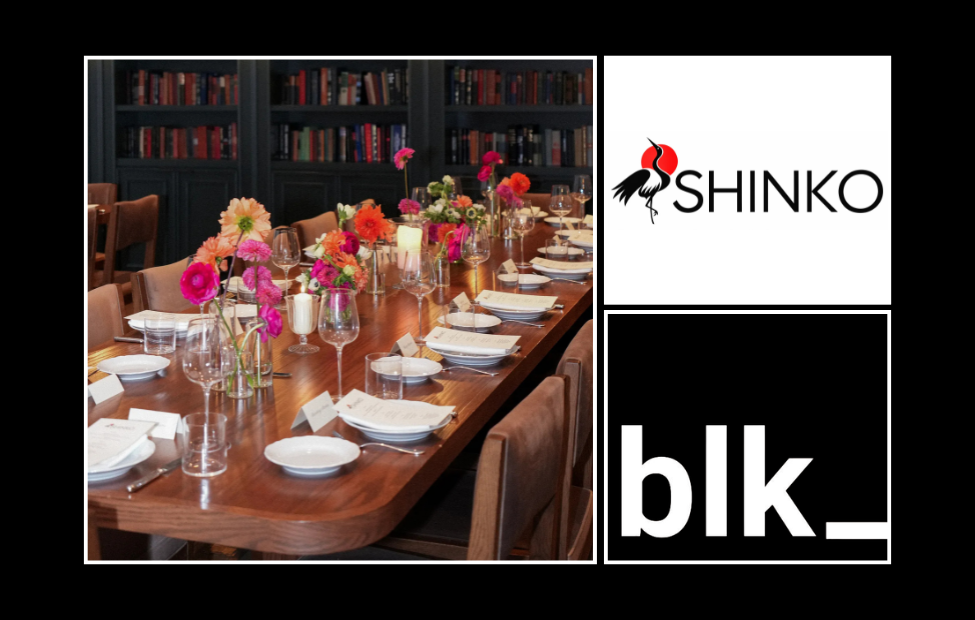
In a moment where creator anxiety is at an all-time high—with AI rapidly threatening production ownership, creative control, and financial sustainability—Imani Laners offered an important blueprint for the future. Recognized as a Top Woman in Media & Ad Tech, a Top 20 to Watch, a Future of Black America Top 50 honoree, and an Ad Club of NY Rockstar, Laners combines strategic intelligence, trusted relationships, and revenue development. As Founder and CEO of Shinko—a Strategic Revenue Advantage company—she helps businesses shorten the path from relationship to revenue through its proprietary Opportunity Intelligence System™, identifying emerging needs and connecting clients directly with qualified decision-makers.

“Great storytelling creates opportunities far beyond the screen. For filmmakers, producers, directors and writers, the challenge is often identifying the brands, investors and organizations that recognize the commercial value of what they’re creating and have the capital, strategic interests and decision-making authority to bring it to market,” Laners explained. “At Shinko, we leverage our proprietary Opportunity Intelligence System™ to identify where creative projects align with business objectives, investment priorities and revenue opportunities. We help companies and creative enterprises with the capital and ambition to grow gain qualified access to decision-makers who can turn that potential into commercial partnerships.”
That high-impact approach came to life on October 6th in partnership with Moss in New York—a private members club in New York focused on intelligent leisure—where Laners convened a powerful brain trust of entertainment, media, and technology leaders for the inaugural Shinko Board Setters’ Dinner: The Business of Brand-Owned IP.
Stepping into that room on an exclusive invite for TheBlkScript was a front-row seat to the future of creator ownership. Amidst an industry grappling with existential shifts, this wasn’t just another networking dinner; it was a high-stakes gathering of visionaries actively building the framework for creator independence, capital protection, and long-term brand equity. Surrounded by powerhouses like award-winning actress and executive producer Gina Torres, Pure Genesis CEO Faye Coleman, Scout Productions veteran Eric Korsh, and executive leaders spanning Rolling Stone, The New York Times, Meta, and Kickstarter, Coty, The Jacob K. Javits Convention Center, Taft Law and The Light House, a Whalar company, the room represented a serious convergence of capital, policy, and creative influence. Everyone in attendance shared an urgent mission: defining how creators and brands can own, protect, and commercialize their intellectual property on their own terms.

Hosted in Moss’s cozy Reading Room, the evening’s ambiance offered the perfect setting for high-level dealmaking and strategic discourse. Rich wood architecture, dark furnishings, and an expansive library underscored the room’s institutional weight, while vibrant floral table arrangements offered a vivid nod to the flourishing possibilities for creator autonomy as AI reshapes the creative space. The setting matched the tone of the gathering: serious, focused, and marked by an openness among leaders eager to exchange practical strategies and real-world playbooks.
The conversations began with a breakdown of how digital founders transition from organic social traction to mainstream network deals.
From Social Media to Prime-Time Ownership
The Voice: Pauline Malcolm (Founder & CEO, BrandStory Architech)

Pauline Malcolm isn’t new to this: she’s driven over $1B in revenue across Disney, Condé Nast, and Essence Ventures, where she transformed Essence into a nine-figure powerhouse. Tuning in virtually, Malcolm broke down how she packaged digital-native concepts into revenue-generating IP through her partnership with Skydance Corporation’s OWN (Oprah Winfrey Network) for Kendra G’s Dating Download and Glow Up in 5 with Zoe Spencer—produced through her firm BrandStory Architech alongside Content.23.
Rather than redirecting social media audiences to traditional TV, Malcolm met viewers directly on OWN’s digital platforms, developing original programming specifically for the network’s YouTube channel. As featured in Inc., her approach flips the legacy TV model: it treats social media not as a stepping stone to linear television, but as the primary venue for creator-led, commercial IP.
The impact of this approach is already scaling fast. Following the launch of Dating Download, Kendra G announced on Tamron Hall that the hit show was greenlit for a second season, which is already taping.
Her primary directive? Build with authentic brand sentiment, but stay fluid. “Brands should be more fluid to audience reception and feedback,” Malcolm noted, emphasizing that listening to your community creates the trust needed to scale.
The IP Blueprint:
Neither creator waited for a legacy green light to build their platform. Kendra G sparked Dating Download organically on Instagram Live during the pandemic before scaling it into a viral singles show and a standalone dating app. Similarly, Zoe Spencer built a massive streaming footprint across TikTok, sketch comedy, and YouTube, leveraging high-energy entertainment to transition into a featured network personality on OWN’s Glow Up in 5. Malcolm’s strategic blueprint lies in her ability to act as an architect, bridging raw creator-led intimacy with corporate capital without diluting the culture. The lesson? Social media isn’t just a proof of concept—when paired with the right digital-first distribution and strategic vision, it’s the foundation for long-term, revenue-generating IP with major entities like Skydance’s OWN.
Curing Creator Isolation and Building Spaces for Creator-Founders
The Voices: Simone Oliver (VP of Editorial Programming) & Jeremy Jankowski (VP of Business Development & Partnerships), The Lighthouse, a Whalar Group

If you’ve ever tried to build an independent media brand from your living room, you know creating in a vacuum can be exhausting. Jeremy Jankowski, VP of Business Development & Partnerships at The Lighthouse, and Simone Oliver, VP of Editorial Programming, introduced the campus model—a hybrid production, collaboration, and community campus with locations in California and New York. “It’s a mixture of Soho House meets WeWork meets a production facility,” Jankowski explained.
At its core, The Lighthouse’s mission isn’t just hosting events; it’s providing dedicated physical space for career creators and creative professionals. Convening a collective representing over 3.1 billion in combined global reach, the campuses offer creators a permanent place to co-create, learn, test concepts, and scale sustainable businesses that fuel creative culture.
For Oliver, human connection must remain the heartbeat of the creator economy. “Storytelling is the human line for everything we do,” she shared. “Creating can be a very solitary existence… when you look at people who create their own business and platforms, often they’re doing it in a bubble.”
As a practical reflection of this collaborative, human-first ethos, The Lighthouse announced their upcoming F the Format Film Festival launching in Brooklyn on December 3, 2026. It’s an initiative that challenges traditional festival constraints by handing creators a strict 5-minute limit.
The IP Blueprint:
In a market flooded with automated content and digital noise, physical spaces and human connection are your biggest competitive moats. Before you can pitch a legacy brand or investor, your IP needs a place to be tested, messied up, and refined around other founders. Whether through physical co-working campuses or experimental initiatives like 5-minute film constraints, The Lighthouse proves that when creators get out of isolation and into supportive environments, defensible, original concepts are born.
Emotional Equity and the Art of Caring for the Narrative
The Voices: Faye Coleman (CEO, Pure Genesis) & Gina Torres (Actress & Executive Producer)

One of the most moving moments of the night came from Faye Coleman and the legendary Gina Torres as they discussed Coleman’s memoir, August with Love—a project centered on a collection of unpublished love letters written in the 1960s by African-American playwright August Wilson to Coleman’s mother while she served him breakfast at a local diner in Pittsburgh.
Coleman shared that discovering these letters allowed her to understand her mother as a woman for the first time, beyond seeing her solely through the lens of motherhood. The conversation with Torres highlighted a deeply human connection: both women bonded over a mutual reverence for August Wilson’s legacy and the profound family history wrapped inside those pages. Torres approached the narrative without Hollywood ego, demonstrating how executive partners must bring a deep sense of care when holding space for legacy stories, honoring the truth of who Coleman’s mother was rather than reducing her history to a standard trope.
The IP Blueprint:
IP isn’t just a legal file; sometimes it’s family history. Coleman took a deeply personal archive and structured it into a protected cultural asset. But the key business takeaway here lies in Torres’ posture toward cultural narratives: in story-driven industries, care is currency. Trust and emotional equity are real business mechanics. Without relational trust between rights-holders and industry leaders, high-value, legacy IP gets diluted before it ever expands into new spaces.
Paperwork Before Pitching: Ownership & Protection in the Age of AI
The Voices: Meagan Sunn (VP of Government Affairs, Taft Stettinius & Hollister LLP) & Eric Korsh (Former President, Scout Productions)
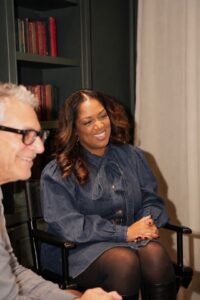
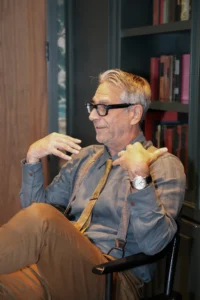
When Eric Korsh, the producer behind global franchise Queer Eye (co-owned between Scout and NBCUniversal across 15 international versions), tells you “the brand funding gauntlet is super narrow,” you listen.
Paired with media policy powerhouse Meagan Sunn, the conversation turned to the legal mechanics of protecting intellectual property in a volatile market. Addressing audience concerns around unauthorized AI voice replication and image theft, Sunn delivered a critical reality check for digital founders: creative IP must be treated like real estate from day one. Rather than treating legal counsel as a reactive fix when something goes wrong, Sunn stressed the importance of building a clean chain of title from the moment an idea is conceived—establishing clear ownership, origin, and contributor rights before taking a concept to market.
The IP Blueprint:
You can have the flyest concept in the world, but if your chain of title is messy, institutional money will walk. As AI makes content theft effortless, legal documentation is no longer optional. Korsh demonstrated that format longevity turns a show into a global empire, but Sunn reinforced that clear ownership documentation is what allows creators to actually bank off that empire. Get your lawyer in the room before you get your pitch deck in the room.
The Final Cut: Claiming Our Seat at the IP Table

Across every panel, the Shinko Board Setters Executive Dinner showed that independent creators and brands have the power to build true media enterprises on their own terms. As AI transforms the creator economy–sometimes to a fault—our power lies in human-centered storytelling, strategic cross-sector funding, and airtight legal protection.
For TheBlkScript community, the takeaway is simple: social media footprint is just the start; true longevity comes from owning the rights to what we build. Whether it’s documenting your chain of title, finding your creative village, or turning personal culture into commercial projects, the future belongs to those who own the rights to their own stories.
For business inquiries or partnership opportunities with Shinko Media LLC, please reach out to opportunities@shinkomedia.com.
–Dominique Young // @heyyydommm